
In this perspective 7 sections
A successful AVD deployment creates a platform. What determines its long-term value is how deliberately that platform is operated.
There is a design. There is a migration plan. There are workshops. There is a go-live date. Then the project team leaves.
And that’s where the real work begins.
In my previous article, Why Azure Virtual Desktop Projects Fail After Go-Live, I argued that most AVD environments do not struggle because of technology.
They struggle because operating a platform is fundamentally different from deploying one.
Deployment is temporary. Operations are forever.
The deployment trap
Many organizations invest heavily in the deployment phase.
Architecture is reviewed. Security is validated. Applications are tested. Users are migrated. The project is considered successful.
Six months later, however, the conversation changes.
Performance issues start appearing. Costs are higher than expected. New applications are requested. Exceptions are introduced. The platform begins to evolve.
This is the moment where deployment stops being relevant.
And operations become everything.
Keep observing the platform
The first three months are usually great.
Everyone is paying attention. Performance is monitored. Issues are investigated immediately. Capacity is reviewed regularly. Then the project finishes. The attention disappears.
Months later I often ask a simple question:
“When was the last time someone reviewed this platform?”
The answer is often uncomfortable. Many organizations have monitoring. Few organizations have ownership.
There is a significant difference between collecting data and actively reviewing it.
If nobody is reviewing:
- Capacity trends
- User experience
- Session host utilization
- Azure consumption
- Login performance
then problems do not disappear.
They simply become surprises.
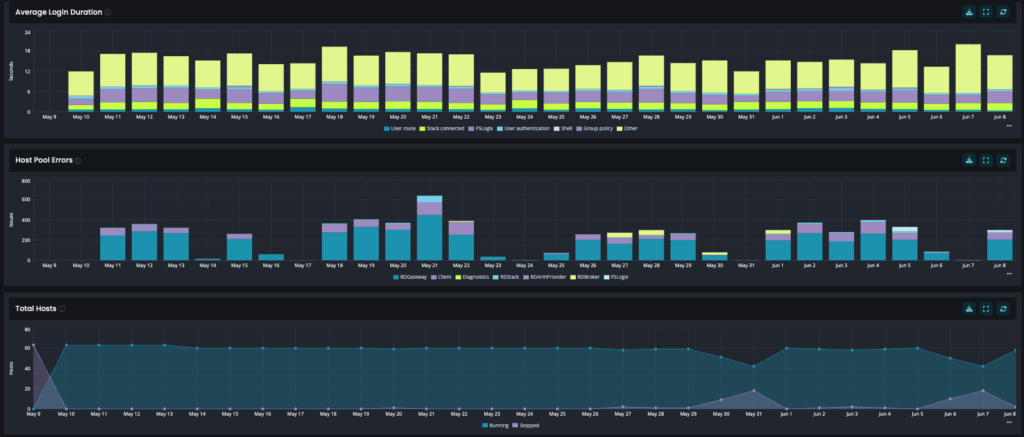
A healthy dashboard today does not guarantee a healthy platform six months from now
Treat autoscaling as an operating practice
One of my favorite questions during platform reviews is:
“Who reviewed the autoscaling configuration this year?”
Most of the time the answer is:
“Nobody.”
The scaling configuration was implemented during deployment.
It worked. So nobody touched it again. Meanwhile:
- New employees joined
- Departments expanded
- Working patterns changed
- Business requirements evolved
Yet the scaling configuration remained exactly the same.
The result is usually one of two outcomes:
Either users are waiting for capacity. Or Azure is consuming money unnecessarily. Sometimes both.
One interesting challenge we regularly encounter is the difference between working days and national holidays.
From a platform perspective, many national holidays behave far more like weekends than business days.
Yet most scaling configurations treat them exactly the same as a normal Monday.
The lesson? Autoscaling is not a deployment task. It is an operational process.
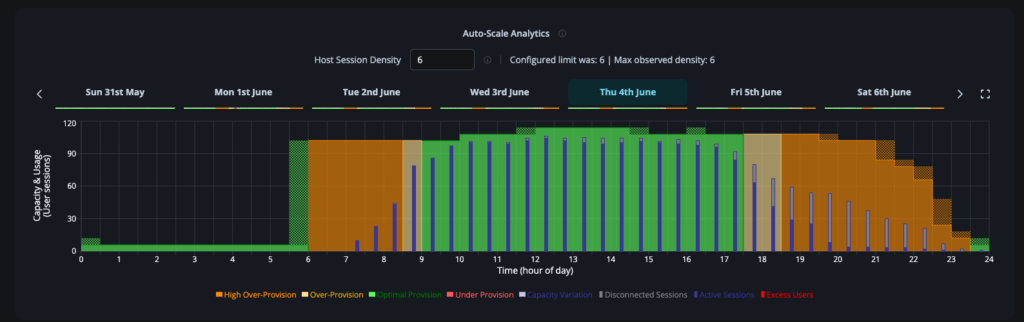
Good autoscaling is not about saving money.
It is about aligning platform behaviour with how people actually work.
Make ownership explicit
This is probably the biggest challenge I see.
Who owns Azure Virtual Desktop? The cloud team? The workplace team? The MSP? Infrastructure? Security? Everyone contributes. Nobody owns the whole.
When ownership becomes unclear, platform maturity slows down.
Changes take longer. Improvements are postponed. Standards become inconsistent.
The most successful AVD environments I encounter all have one thing in common.
Someone wakes up every morning feeling responsible for the platform.
Not the project. The platform. Ownership beats architecture every single time.
Measure the user experience
Administrators love dashboards. Users do not. Users care about three things:
- Can I log in?
- Is it fast?
- Can I do my work?
That is it.
I have seen beautifully designed environments receive complaints because login times increased by twenty seconds.
I have also seen technically imperfect environments receive praise because the user experience was predictable and consistent.
A successful platform is not measured by architecture diagrams.
It is measured by user satisfaction.
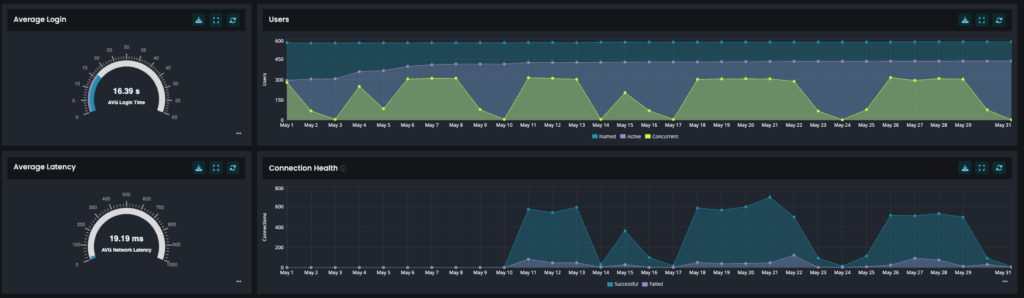
Users do not judge your deployment. They judge your experience.
Use tooling to reinforce the operating model
The challenges above are not Azure Virtual Desktop problems.
They are operational challenges.
The more mature a platform becomes, the more important operational tooling becomes.
Whether that tooling comes from Microsoft, Nerdio (where the screenshots come from), or another vendor is often less important than the outcome.
The goal is always the same:
- Better visibility
- Stronger governance
- Improved user experience
- More consistency
- Less manual administration
Technology enables the platform. Operations sustain it.
Operations determine the outcome
The biggest lesson I have learned from Azure Virtual Desktop is surprisingly simple.
Deploying Azure Virtual Desktop is not the difficult part.
Operating it is.
The organizations that succeed are not necessarily the ones with the most advanced architecture.
They are the ones that continuously review, improve, automate, and challenge their own assumptions.
Because after go-live, Azure Virtual Desktop stops being a project.
And becomes an operational platform.